
New Year's extra
A few cultural recommendations gleaned during the past year. Not necessarily on the general themes of this Substack, but worthy of note

Friends and family members know that I am an inveterate recommender of cultural content that I have recently consumed and enjoyed: podcasts, articles, books, films, music. I have little doubt that my regular, unsolicited advice can at times be tiresome, but fortunately, they are a kindly bunch who keep their irritation to themselves.
Book: Looking for a book for possible review last spring, and in this case one that did have a Jewish theme, I came across “The Red House,” a novel by Mary Morris. The story begins with the narrator, Laura, telling us about the disappearance of her mother, Viola, from their middle-class family’s home in suburban New Jersey 30 years earlier, in 1972. Laura is now the same age her mother was when she vanished inexplicably, and she decides abruptly that the time has come to discover what happened to her.
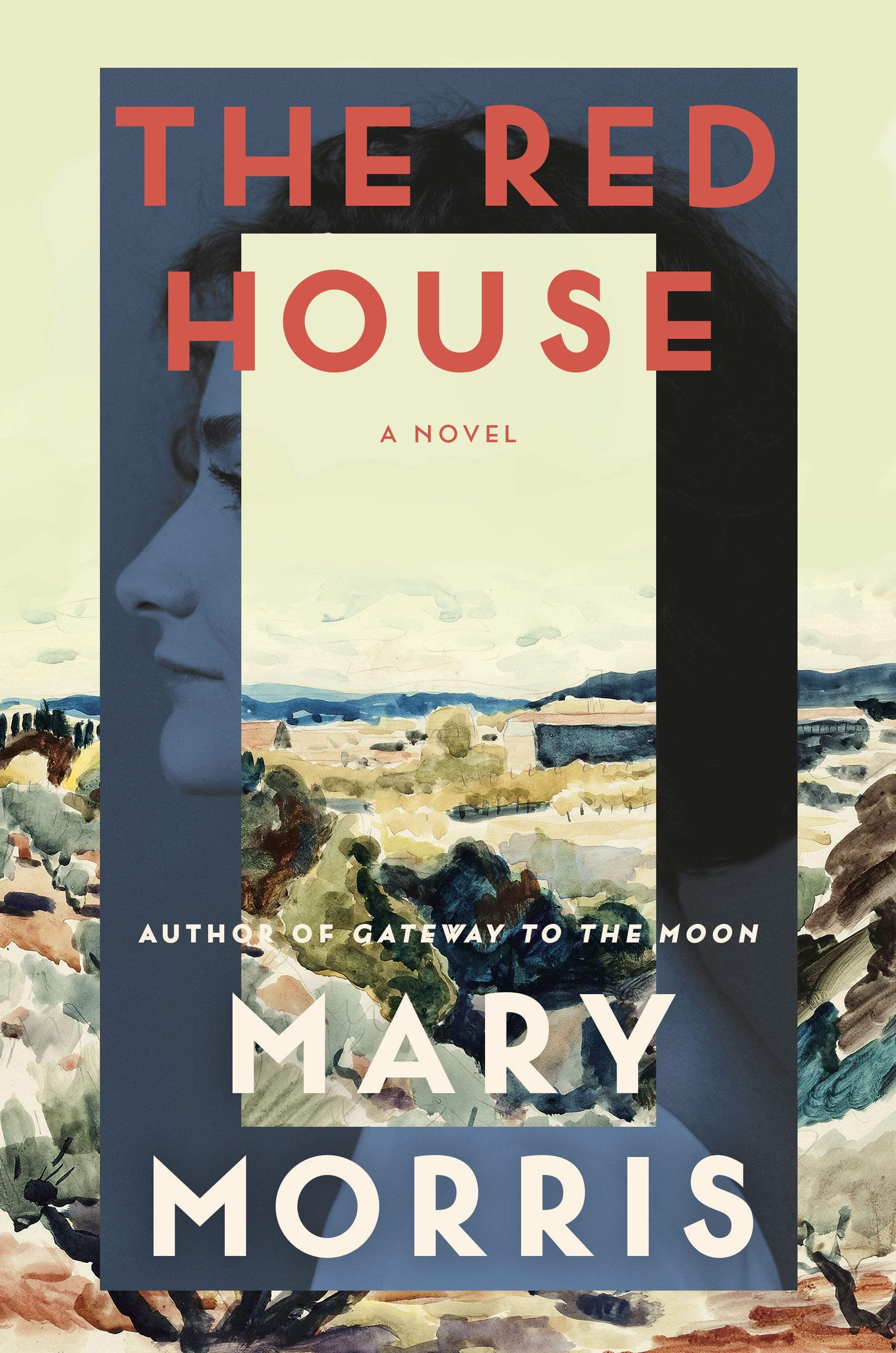
Leaving behind only a note telling her husband she’ll be in touch, Laura flies to the far south of Italy, where her mother, a native, met Laura’s father, a U.S. reconnaissance pilot, after World War II, and where Laura was born. To her surprise, she learns that her mother’s family was Jewish, and that in 1942 when Laura was in her early teens, they were interned by the fascist regime in a low-security camp for foreign-born Jews and political prisoners. The rest of the book consists of the daughter’s assembling, piece by piece, the life story her mother never shared with the family.
As a mystery tale that gradually unfolds like a police procedural, “The Red House” had no problem holding my attention. It is in fact a moving story full of unanticipated twists and turns. But it holds the added value of shining a light on what was to me an unknown episode in Italian Holocaust history, one that Morris clearly invested much effort in trying to recreate accurately.
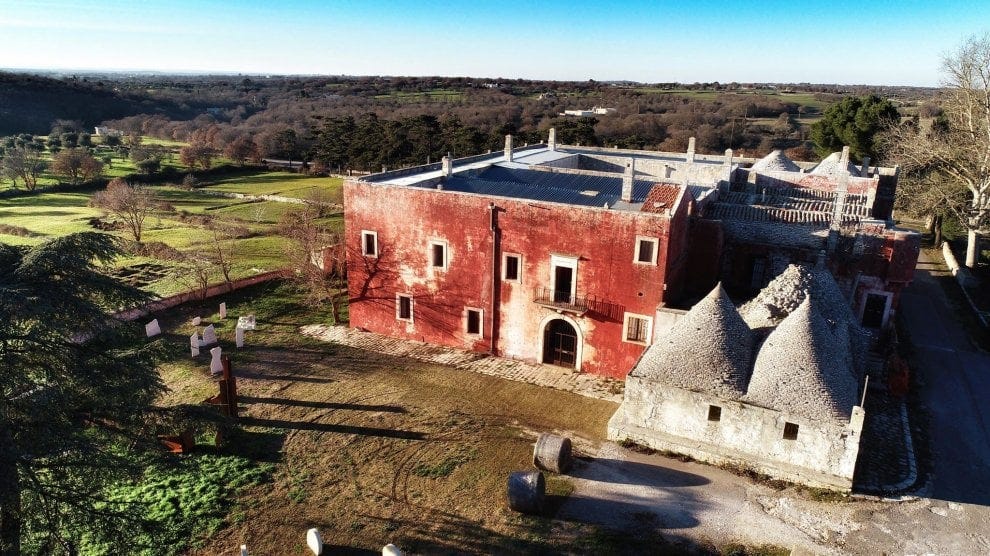
The red house of the title is a red-brick building on a former family estate in Alberobello, in Puglia, where, in the period before Italy began to deport Jews to their deaths at German hands, the Mussolini regime incarcerated enemy aliens and other “undesirables.” It was one of a network of concentration camps (as they were called in Italian) across the country that ultimately held a little over 6,000 Jews, in conditions that were far from adequate, but not intended to work them to death.
As we learn about Viola’s early years, a period whose details she never even shared with her husband, we are exposed to a life story so dramatic it seems beyond belief, even as we realize that tens of millions of the victims of war in every era, including the present, experience and even, if they are lucky (though this is arguable), survive.
Films: Two films in particular stood out among the handful of overall excellent movies I saw at last summer’s Jerusalem International Film Festival, which didn’t seem to suffer in quality despite any boycotts it may have been subjected to. One of them, “The Secret Agent,” from Brazil (and in Portuguese), picked up a slew of prizes at Cannes last spring, and can be expected to continue in that vein through to this winter’s Academy Awards. it’s in Portuguese. You can read about it elsewhere, and I will just take the opportunity here to urge you to stream it. It’s deadly serious, but also quirky and funny, and not one of its 158 minutes is boring or predictable.
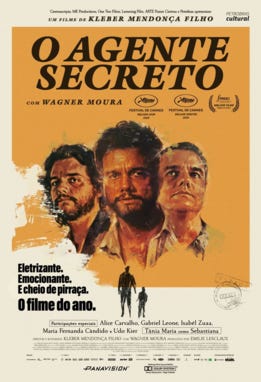
Despite its name, “The Secret Agent,” written and directed by Kleber Mendonça Filho, is a political thriller not an espionage tale, telling the story of Marcelo (Wagner Moura), a Sao Paolo chemical engineer who is on the run in dictatorship-era Brazil for reasons that only gradually become clear – slightly, that is, in the way that events in corrupt and lawless states can be understood.
“East of Wall” was the most surprising movie I’ve seen in years. It is director and screenwriter Kate Beecroft’s first feature, and it’s based on the true story of the Wall, South Dakota, horse ranch owned and operated by Tabatha Zimiga. Zimiga’s ranch doubles as a safe refuge for a bunch of teens and young adults for whom living at home is no longer an option. And she herself is “at risk,” as her husband and business partner has recently died, and she is struggling to hold it all together.
As Beecroft explained in an interview at last winter’s Sundance Festival, she was driving around in the American West looking for a subject for her next documentary, when someone told her to check out Zimiga and her ranch. She met this remarkable horse whisperer, who is no less roficient at raising adolescents, and was so taken by her that she remained at the ranch for the next two years. Eventually, she convinced Zimiga herself and her daughter Porshia to play themselves in the film she decided to shoot about them. They are joined by a few professional actors (including Jennifer Ehle as Tabatha’s mother) and a handful of other Wall locals
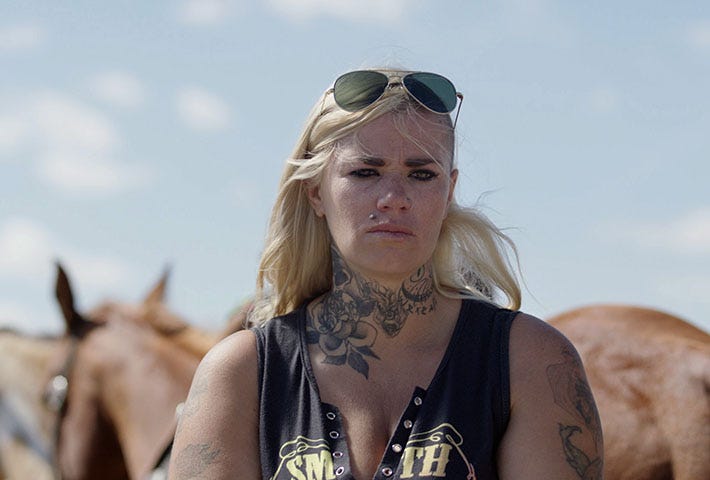
.In the largest sense, the plot has a predictable dramatic framework, but the situation is so unusual, and the characters and setting so powerful, that you emerge from watching “East of Wall” a little bit changed.
Podcast: Sometimes I feel like everything interesting I’ve learned over the past decade came from a podcast, and that’s not only a minor exaggeration. Not having to spend much time on the road, and our beloved dog died several years ago, I have to grab opportunities to listen when they arise, which means that I find myself hanging a lot of laundry.
For the past two years, I have been a regular listener to the “Ukraine Explained” podcast, which is produced by Internews Ukraine, a media NGO dedicated to bring the besieged country’s narrative to the world, and does so in a number of languages.
The host of Ukraine Explained is Volodymyr Yermolenko, a philosopher and journalist, and Ukrainian patriot of the best kind, by which I mean that he loves his country, and he understands that telling the truth is ultimately more effective than propaganda. expresses that love by trying to help outsiders learn about its. His values are those of the Enlightenment (he also serves as president of P.E.N. Ukraine), and most of his conversations on the podcast are about Ukrainian culture and political thought, rather than horror stories about Russian atrocities.
Some of the conversations, I will admit, are over my head, for example the one on “Ukrainian Geopolitical Thought,” in which he talked with diplomat Danylo Lubkivsky about just that, and another about “the genealogy of the myth that Kyiv is a ‘Russian city.’” But others offer fascinating insight to the non-expert on the country’s complex identity. I have particularly appreciated the conversations that Yermolenko has had with American historian Timothy Snyder in the presence of audiences of Ukrainian intellectuals.
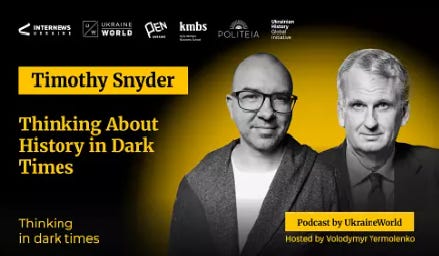
Snyder, the very prototype of the engaged intellectual, is author of several innovative (and controversial) books about Holocaust history, and more recently of the titles “On Freedom” and “On Tyranny: Twenty Lessons from the Twentieth Century.” (Here is a link to his Substack feed.) In each of the recorded appearances, Snyder and his audience, though speaking English, he sometimes breaks off into fluent Ukrainian, which seems less a case of his showing off than of expressing his deep sense of identification with his Ukrainian audience, whom he has journeyed into a war zone to meet. In one from a year ago, he conversed with an audience at an unnamed location in Kharkiv about the meaning of “freedom,” the subject of his most recent book. No less exhilarating and profound was this past October’s conversation of Snyder and Yermolenko about the former’s understanding of the very concept of “history.”
Another, highly accessible, conversation of Yermolenko’s was with Marci Shore, the scholar of intellectual history (and, as it happens, the wife of Timothy Snyder; you may recall that they both left Yale for the University of Toronto after the re-election of Donald Trump in 2024). Shore spoke with the host about the lessons of Hannah Arendt on evil, and what they can teach us about our situation today. Their conclusion: Quite a bit.
YouTube lecture: Not for the faint-hearted, Yanis Varoufakis’s lecture from this past November is his explication of why he believes Israel is on a slippery slope toward civil war.
Varoufakis, a former Greek economics minister, and undeniably a pretty tough critic of Israel, but as he himself explains toward the end of this 26-minute talk, “for those who care about Israel, genuinely care about its survival and flourishing, the kindest thing you can do is tell the truth about what’s happening, not deny it, not minimize it, not excuse it.” What’s happening, according to Varoufakis, is an impossible combination of unbridgeable political divisions, demographic changes (specifically, the growth of the ultra-Orthodox community) that are not economically sustainable, and a prime minister who has his own personal reasons to hold on to power at all costs
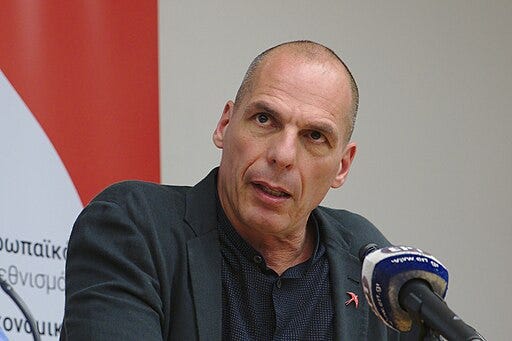
If you follow developments in Israel, little of what Varoufakis has to say will surprise you, but hearing it all presented methodically and in precise detail, by an economist who is also an “outsider,” as it were, is chilling.
On that note, I offer my wishes for a better year for all, and Shabbat Shalom.